


From Liberia
to New York Fashion Week.
to take Juah national.
Princess Bombyck migrated from war-torn Liberia, became a community health worker, bootstrapped an activewear brand from savings, walked the NYFW runway, won a $15,000 pitch competition, and earned the audience vote at the IRC Salt Lake pitch competition — all while working full-time at the University of Utah School of Medicine. Juah Apparel is what happens when strength is the product.
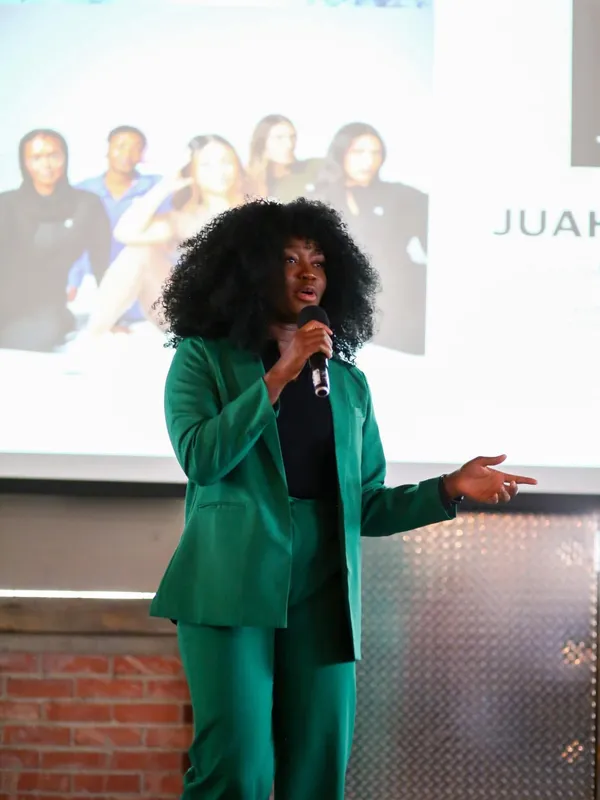
She didn't build Juah
to sell leggings.
Princess Bombyck grew up in Liberia during a period of conflict. The catalyst for her life's work was not ambition — it was witnessing a humanitarian aid worker from the United States arrive in her community and change lives simply by showing up. “I want to be like that,” she said. “I want to help people in need.” That single moment shaped everything that came after.
She moved to the United States, studied at Brigham Young University–Idaho, and went to work in public health — specifically focused on underserved rural communities. Through that work, she saw the same gap in every population she served: people understood that exercise was essential to health, but the barriers to access were everywhere. Cost of gear. Access to space. A fitness culture that did not reflect who they were.
She became a personal trainer. She started running free fitness classes. And when her clients could not afford quality activewear, she built the brand herself — bootstrapped from her own savings, sourced through research, built through relentless networking and pitch competitions that she entered not to win prizes but to find people who understood what she was actually building.
Program Manager · University of Utah School of Medicine
Founder · Health Impact Alliance
The brand name says it directly. Juah means strength in Kru — Princess's native language. It is not a marketing choice. It is a declaration of what the brand is made of and who it is made for.
Bootstrap. Pitch. Win.
Repeat.
Princess does not have a venture fund behind her. She funded Juah the old-fashioned way — savings. “I'm from a culture where we are afraid of debt,” she said. “We prefer to deal with cash.” Every dollar in the brand came from her own income, directed by research, and deployed with precision.
The results of that discipline have been validated on stages that do not give prizes for effort:
She also completed the Salt Lake Chamber's Diverse-Owned Business Accelerator, Spring 2024 cohort — a competitive program for minority-owned businesses building toward scale. At FitCon Salt Lake City, Juah showed at one of the largest fitness expos in the Mountain West. The New American Dream Lab business pitch competition added another stage where Juah emerged among 21 contestants.
“It's not about the leggings. Because there are a lot of cool lifestyle and fitness clothing brands out there. What Princess and Juah bring to the space is something completely different.”
Competing with Lululemon
on a bootstrap budget.
The activewear market that Juah is entering is enormous and — on the surface — brutal. Lululemon generated over $9 billion in revenue in fiscal 2023. Fabletics operates a membership model at scale. Nike's women's category alone dwarfs the entire DTC activewear space. Amazon lists thousands of generic leggings at commodity prices.
But Princess identified the gap that none of these brands fill: activewear designed with an explicit health equity mission, marketed to underserved communities, priced accessibly, and backed by a founder whose public health credentials are real. She is not selling a lifestyle aspiration. She is selling access to movement for people who have been systematically excluded from the wellness industry's marketing.
The strategic position is clear. Juah does not need to out-spend Lululemon on paid advertising. It needs to reach the communities that Lululemon's $9 billion marketing budget systematically ignores. That is a targeting and channel problem — exactly what DesignAdvertise.ai is built to solve.
The story was already there.
The infrastructure wasn't.
Juah Apparel has everything a DTC activewear brand needs to break through — a founder whose story commands attention, a product that genuinely delivers on its promise, and a mission that resonates deeply with communities that major brands have overlooked. What it did not have was the advertising infrastructure to tell that story at scale across the channels where its customers actually live.
A founder working full-time as a Program Manager at the University of Utah School of Medicine — while also managing a graduate research position and running Health Impact Alliance — does not have spare hours to manage six ad platforms, govern creative consistency across Meta, Google, TikTok, and Pinterest, and build audience segments that reflect the nuance of Juah's mission.
- Story visible only to people who already found Juah — no paid discovery
- No Google Shopping — product not live when buyers search activewear
- No Meta ads — social presence not amplified with paid reach
- No creative governance — brand voice inconsistent across any channel
- No audience segmentation — underserved community targeting not built
- Full-time founder with no bandwidth to manage ad platforms
- Multi-channel presence — Google Shopping, Meta, TikTok, Pinterest all governed
- Product catalog live as ads at the moment buyers search activewear
- Paid social reach amplifies the NYFW and pitch competition story
- Mission-first creative governance — every ad reflects health equity positioning
- Audience segments built for underserved community buyers
- GENYS intelligence layer learning what converts across every channel
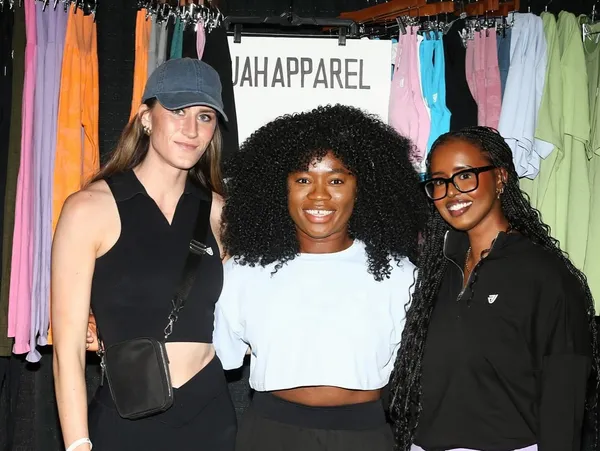
Princess Bombyck presenting Juah Apparel, and the team at a pop-up event.
Built for a brand that competes
on story, not spend.
Juah's advertising strategy is built around a single constraint and a single advantage. The constraint: budget is limited. The advantage: the story is extraordinary. Every channel decision and every creative governance rule is designed to maximize the reach of that story among buyers for whom it will land with the most force.
The wellness industry has a
visibility problem.
The global activewear market spends billions on advertising. Almost none of it reaches the communities Princess Bombyck has spent her career serving — underserved populations for whom exercise access is a public health issue, not a lifestyle preference. The brands with the largest ad budgets build campaigns for buyers who already have access to gyms, trainers, and disposable income for premium gear.
Juah's product is designed for the buyers those brands ignore. The quality is real — the product delivers the buttery-soft feel of premium activewear at a price point that does not require a membership or a significant income. The mission is not a marketing layer on top of the product. It is the reason the product exists.
What DesignAdvertise.ai adds to that mission is reach. The story is already extraordinary. The channel infrastructure makes sure that the communities who need to hear it actually find it — not through word of mouth alone, but through a governed, intelligent, multi-channel advertising system that keeps Juah visible at every touchpoint where its buyers are paying attention.
If you are building a brand
that means something,
the story is already your most powerful asset.
Princess Bombyck did not build Juah with an agency retainer, a venture fund, and a growth marketing team. She built it with savings, research, a product she personally needed, and a mission she has spent her career working toward. The traction — NYFW, a $15,000 grant win, a pitch competition audience vote, FitCon — came from the story being real enough that people felt compelled to invest in it.
The gap for most mission-driven DTC founders is not the story. It is the infrastructure to tell that story across the channels where buyers are actually making purchase decisions. DesignAdvertise.ai closes that gap.
We build the infrastructure to tell it.